


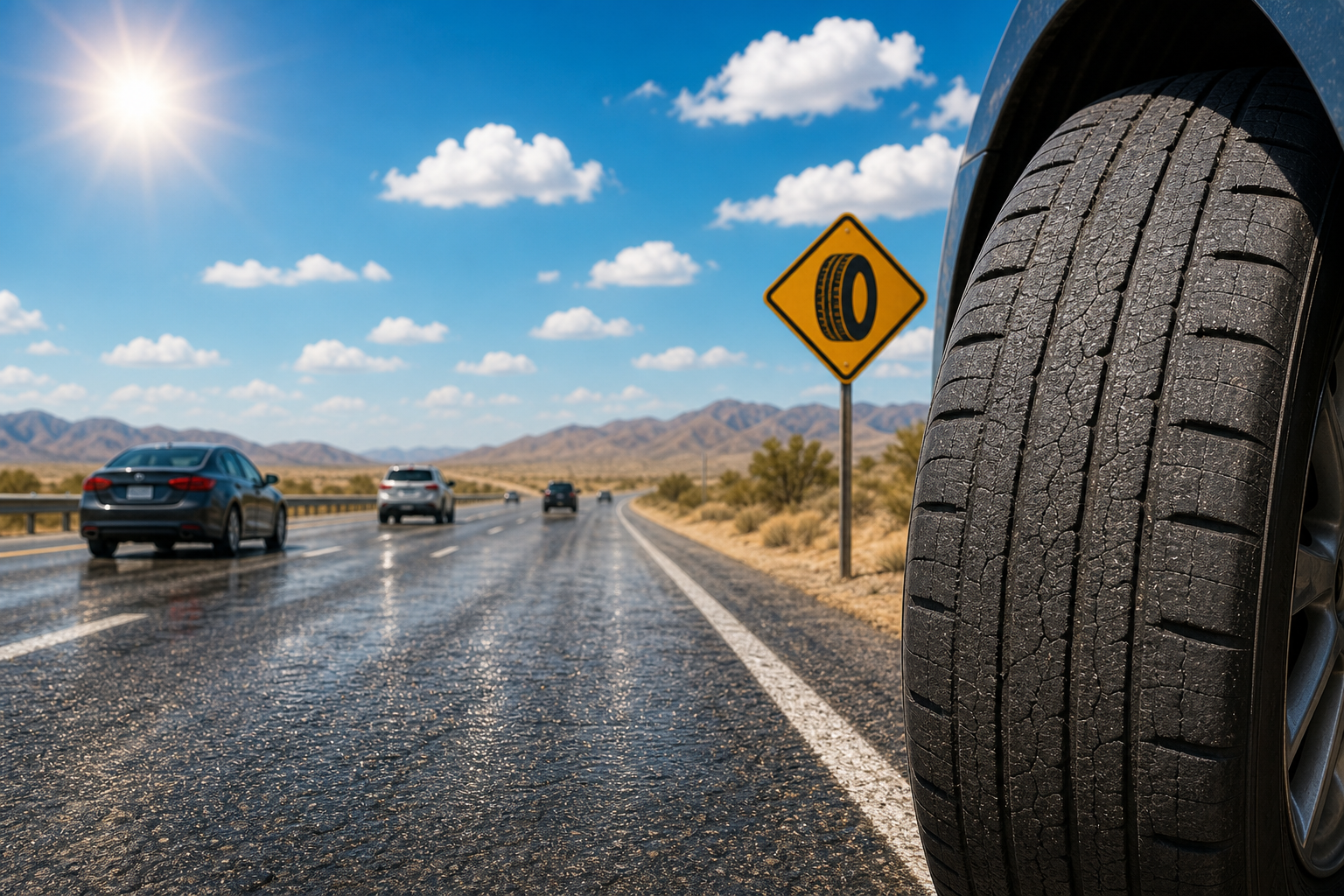
Peak summer temperatures do far more damage to vehicle tires than most drivers realize. When the outside air hits 90 degrees, the temperature of the asphalt underneath the vehicle can easily soar past 140 degrees. Combining that extreme surface temperature with the constant friction of driving creates an environment that rapidly breaks down tire rubber.
The Science of Heat and Tire Wear
Tire compounds respond directly to temperature changes. The same principles that make winter tires effective in freezing conditions work against standard tires during hot months. Winter tires rely on a softer rubber compound to stay pliable on cold roads, but standard all-season tires subjected to intense summer heat begin to soften excessively, causing the tread to wear down at a significantly accelerated rate.
Braking and Safety Risks
Accelerated tread wear isn't just an inconvenience; it presents a direct risk on the road. Even if a vehicle's braking system is operating in peak condition, worn tires lack the grip necessary to stop the vehicle efficiently. Thin tread drastically increases overall stopping distance, which becomes especially dangerous during sudden highway slowdowns or sudden summer rainstorms.
Protecting Your Vehicle Before the Heat Hits
Preventing unexpected tire failure starts with proactive inspections. Having an ASE-certified technician evaluate tread depth and wear patterns at the start of the season ensures that the rubber can safely handle high-temperature driving. A thorough check will identify uneven wear early and provide a clear estimate of how much life remains on the tires before the season ends.
Schedule an inspection today to keep your vehicle running smoothly. To book an appointment, call 973-786-3030 or visit www.autorepair.shop.